01
Inspect
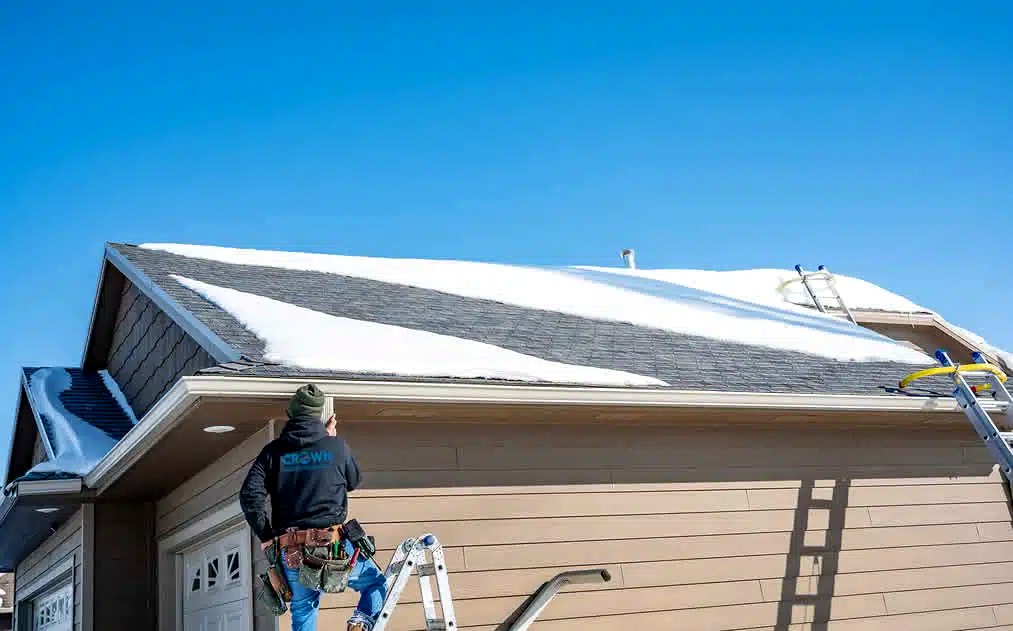
Clear roof-condition photos for wind, hail, leaks, and missing shingles.
Wind, hail, falling branches, and severe Iowa storms can leave homeowners wondering whether to call a roofer, call insurance, make a temporary repair, or wait for an adjuster. This guide walks through the common roof and siding claim process so you know what to document, what to ask, and what to expect.
Clear roof-condition photos for wind, hail, leaks, and missing shingles.
Claim-ready notes, repair scope details, photos, and follow-up items.
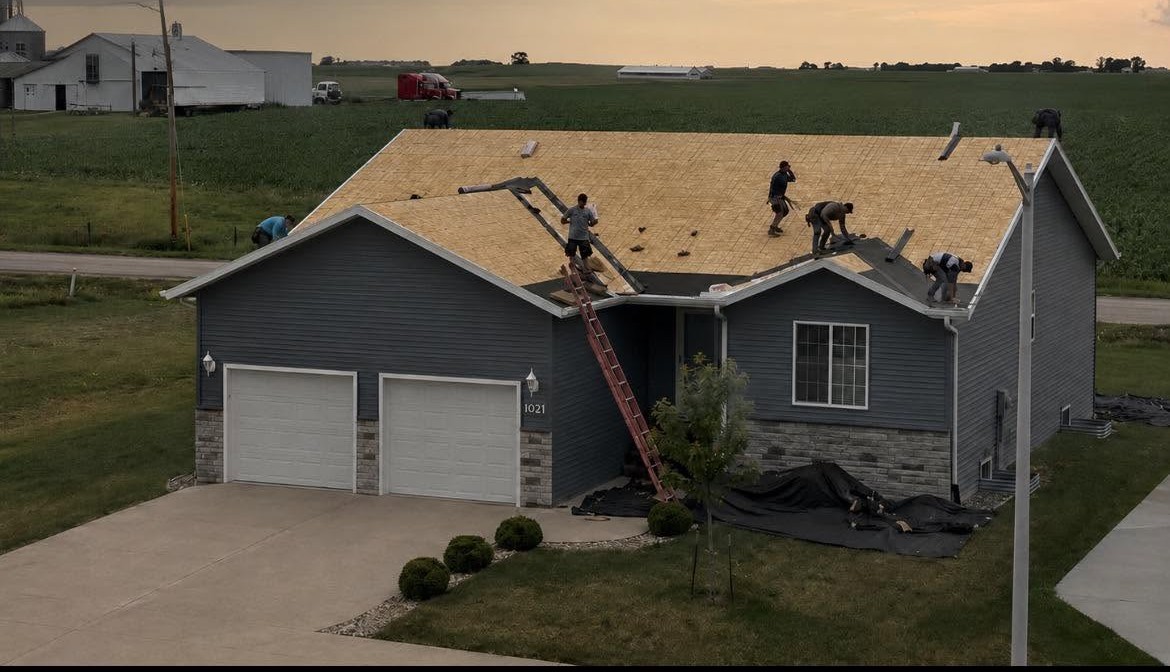
Restore the roof with clean communication from inspection through completion.
The first few steps are about safety, documentation, and preventing the damage from getting worse. You do not need to diagnose the whole roof yourself.
Do not climb on a wet, damaged, icy, or steep roof. Look from the ground and check inside for ceiling stains, dripping water, or wet insulation.
Take pictures of shingles, gutters, downspouts, vents, siding, window screens, fallen limbs, interior water spots, and any temporary protection work.
If there is active leaking or an opening, reasonable temporary protection may be needed. Keep receipts for tarps, emergency materials, or temporary labor.
A professional inspection can help separate normal wear from storm-related roof, siding, flashing, gutter, or ventilation damage.
Compare the likely repair cost with your deductible before filing. Some smaller repairs may be simpler to handle directly.
When the damage appears claim-worthy, file through your carrier, agent, app, or official claims phone number and keep your claim number handy.
Every policy is different, and your exact process depends on your carrier, your agent, your deductible, and the wording of your policy. Use the official links below to start in the right place.

How to start: File online, use the State Farm mobile app, contact your local agent, or call 800-SF-CLAIM.
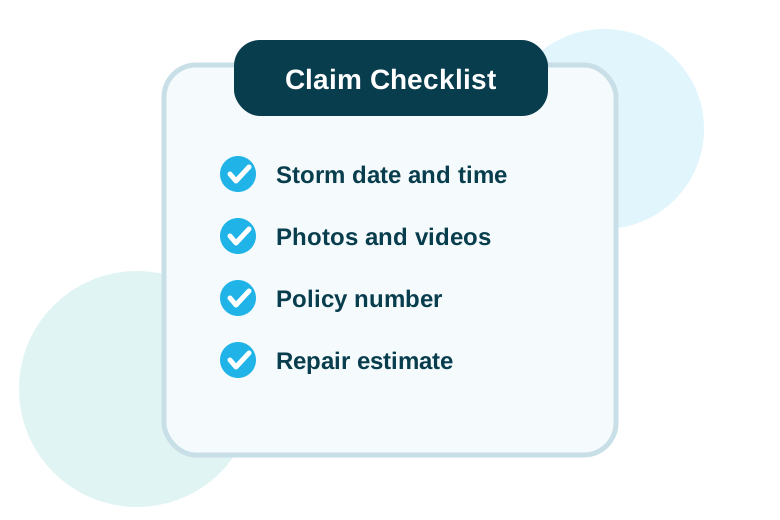
Have ready: Storm date, policy number, photos, temporary repair receipts, and notes about wind, hail, leaks, or missing shingles.

How to start: Report a property claim online, contact your Farm Bureau agent, or call their 24-hour customer service support line.
Have ready: Insured name, address, policy number, date of loss, and a plain description of what was damaged.

How to start: Text STORM to AMFAM, use the MyAmFam app, file online, or call the Claims Customer Care Center.
Have ready: Photos, videos, loss date, property address, policy information, and any emergency repair documentation.

How to start: Start a home, wind, hail, or catastrophe claim online, through My Account/app, through your agent, or by phone when applicable.
Have ready: Policy information, property address, storm date, visible damage notes, and photos of roof, gutters, siding, vents, and interior leaks.

How to start: Progressive home policies may be handled by the underwriting company listed in the policy. Log in or call Progressive and they can direct you to the right claim team.
Have ready: Policy number, property insurer name if different from Progressive, damage photos, and a description of the roof or siding issue.

How to start: File online or call Claim Customer Services. Travelers may use on-site or virtual inspections depending on the loss.
Have ready: Policy number, date of loss, description of damage, photos/videos, and any contractor estimate requested by the claim professional.

How to start: File a property, wind, or hail claim online or by phone. Nationwide asks for basic contact details, policy information, and the type of damage.
Have ready: Name, address, phone, policy number, damage type, and a description of what happened.

How to start: File online or call the Farmers Claims Center. A claims representative reviews the claim and explains coverage and next steps.
Have ready: Loss date, property address, policy number, photos, contractor notes, and receipts for emergency protection work.

How to start: Auto-Owners directs policyholders to report property claims through their local independent agent.
Have ready: Agent contact, policy number, storm date, photos, and a description of roof, siding, gutter, or interior damage.

How to start: Report a claim through your local IMT independent agent. If the agent is unavailable, IMT provides 24/7 claim reporting by phone.
Have ready: Policyholder details, policy number, loss date, property address, and damage photos.

How to start: Submit a claim online, contact your agent, or use Grinnell Mutual’s claims call center as directed on their claim pages.
Have ready: Contact and policy information, what happened, when it happened, and what property was damaged.

How to start: Report through Policyholder Access, call 24-hour claim reporting, or ask your insurance agent to submit the claim to EMC.
Have ready: Policyholder login or agent contact, policy number, loss date, photos, and a description of damaged property.
The best claim conversations are factual. Stick to what happened, when it happened, what you can see, and what has been documented. Avoid guessing about coverage, promising outcomes, or assuming every mark is storm damage.
The insurance company decides coverage under your policy. A contractor can help identify and explain the physical roof work that may be needed.
Clear roof-condition images help keep the claim conversation focused on visible findings.
Notes, repair scope details, and photo references stay together for easier review.
After the claim is opened, the carrier or an inspection vendor may contact you to schedule a roof, siding, gutter, or interior inspection.
The adjuster may look for storm direction, hail impacts, wind-lifted tabs, missing shingles, soft metal dents, flashing damage, and interior leaks.
The insurer prepares an estimate for the items it believes are damaged and covered. Review the scope carefully before work begins.
Once the scope is understood, Robertson Roofing & Siding can explain repair or replacement options and perform approved work.
These terms are commonly seen on roof and storm-damage estimates. Always check your own policy and ask your insurance agent or carrier for coverage-specific answers.
The amount you are responsible for before insurance payment applies. Some policies may have different deductibles for wind or hail.
ACV usually means replacement cost minus depreciation. Older roofs may be handled differently depending on the policy.
Replacement cost coverage may pay toward replacing covered damaged materials, often with recoverable depreciation handled after work is complete.
A reduction for age, condition, or life expectancy. Some depreciation may be recoverable depending on the policy and completed work.
The written list of items the insurer believes need repair or replacement due to the covered event.
A request for review when hidden damage or missing line items are found during the repair process. The insurance company decides whether to approve changes.
Robertson Roofing & Siding can inspect physical roof and siding damage, provide photos, prepare repair or replacement estimates, explain the construction work needed, answer questions about its estimate, and be present at an inspection to discuss roof conditions and construction details.
Robertson Roofing & Siding does not act as your public adjuster, does not negotiate policy coverage, does not promise a settlement amount, and does not determine what your insurance company will or will not cover.
Robertson Roofing & Siding can inspect the visible roof and exterior damage, explain practical repair options, and prepare a clear roofing or siding estimate.